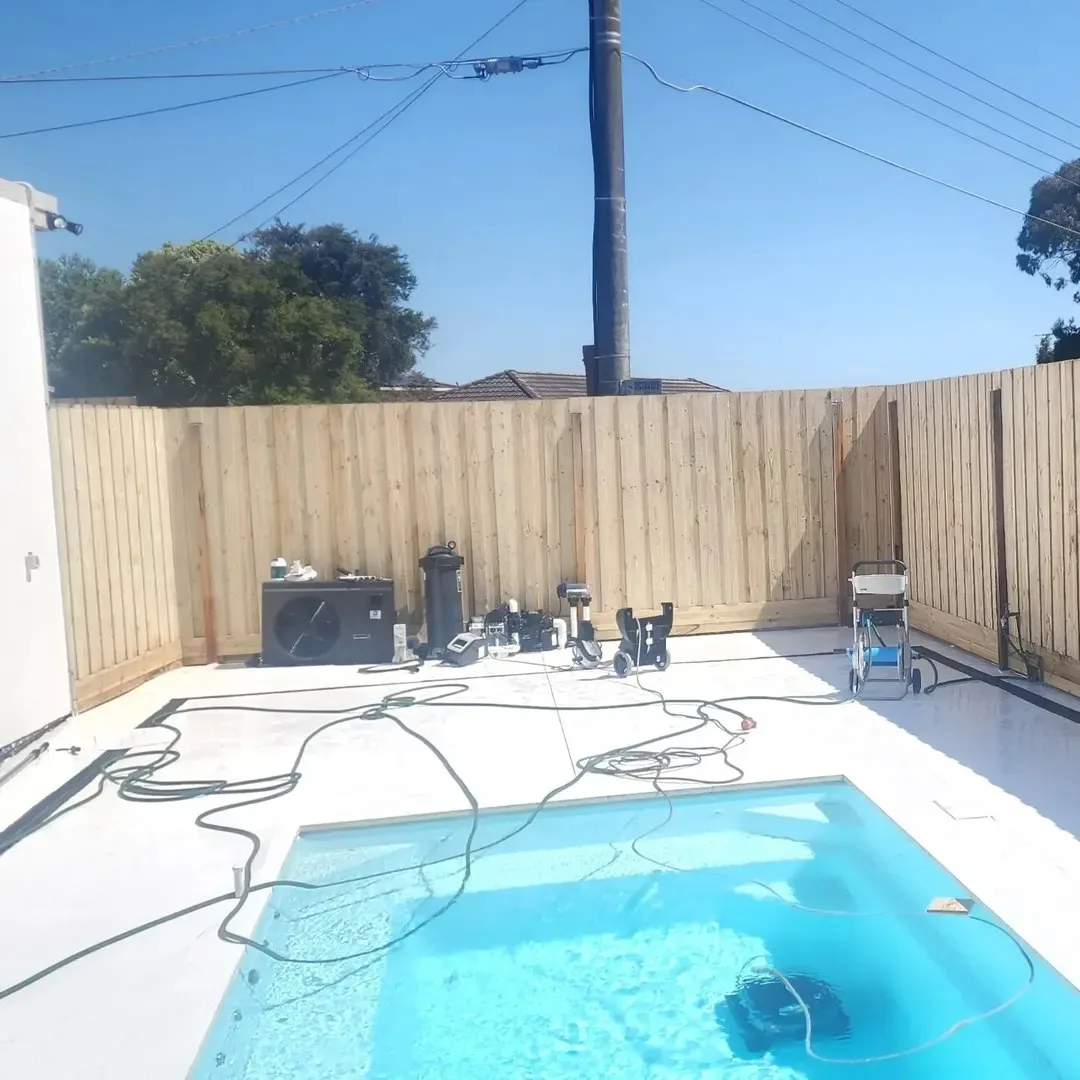
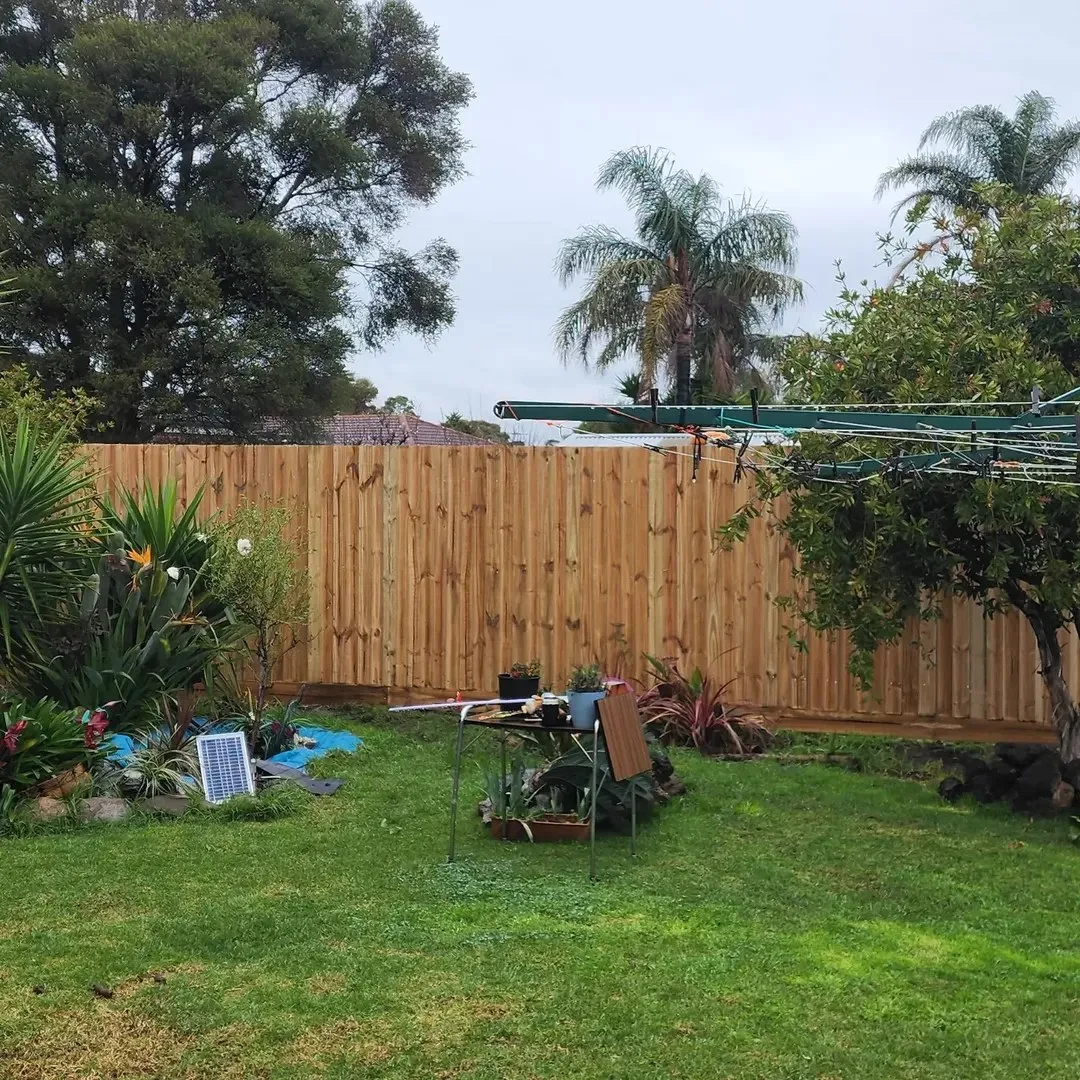
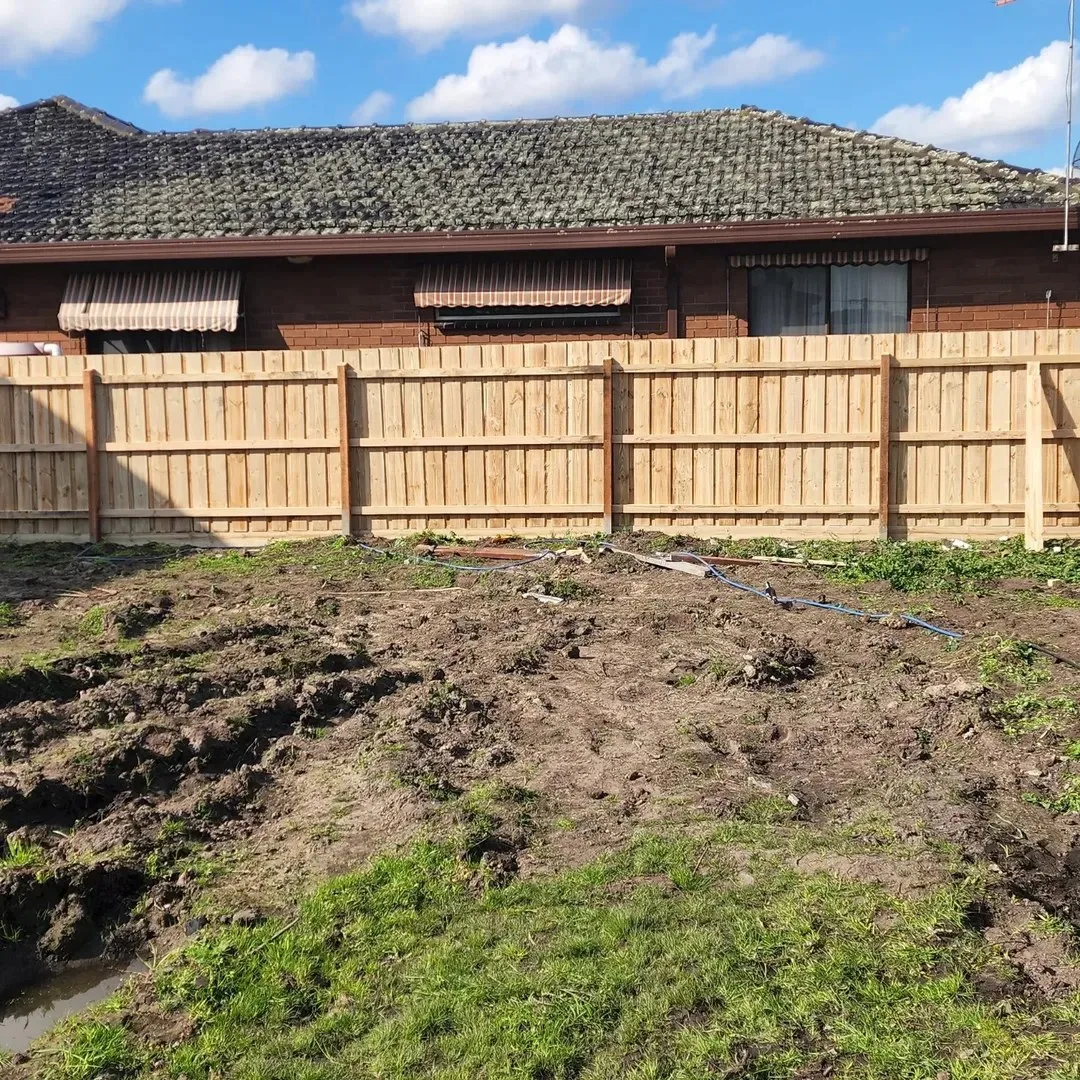
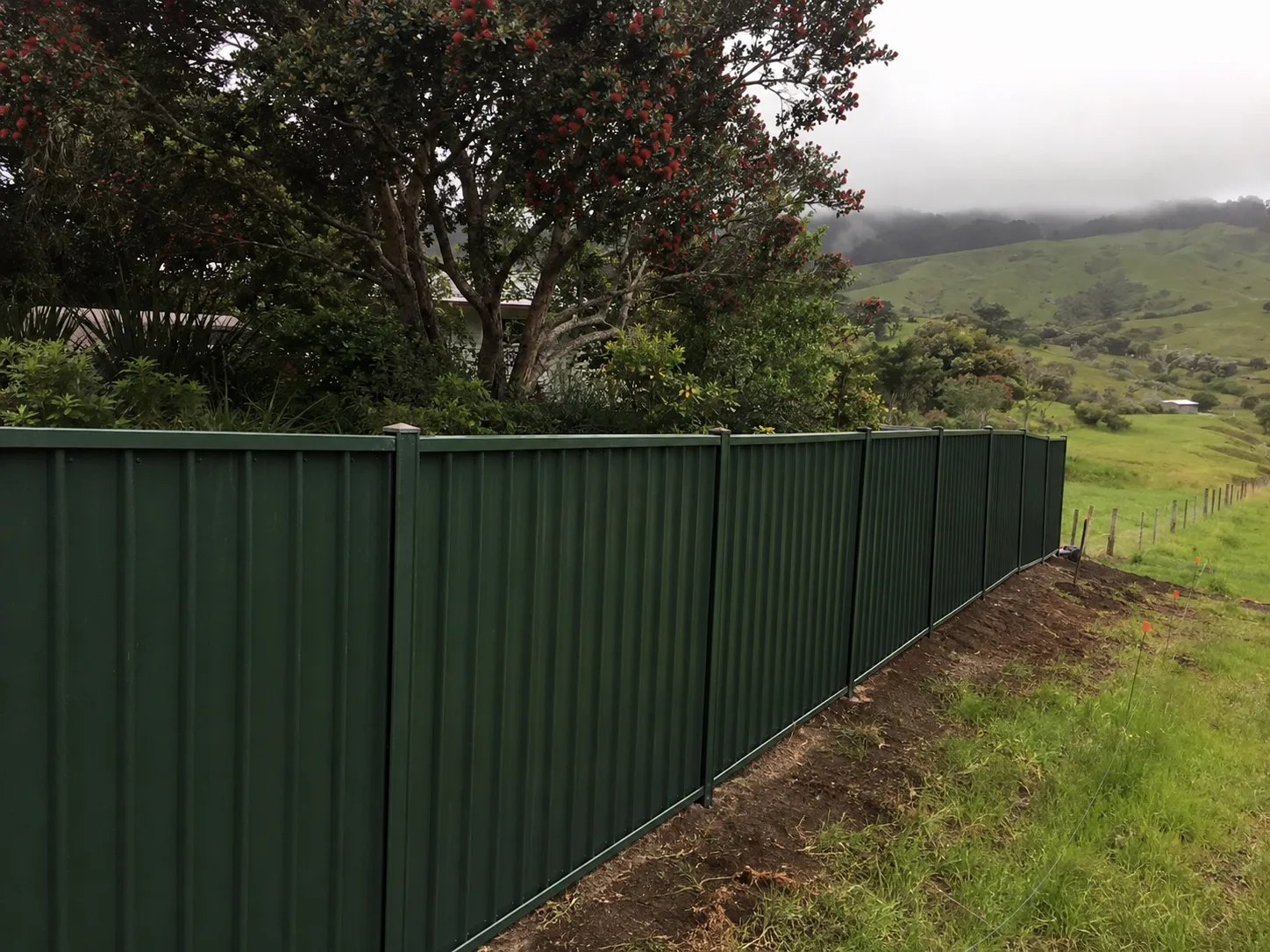
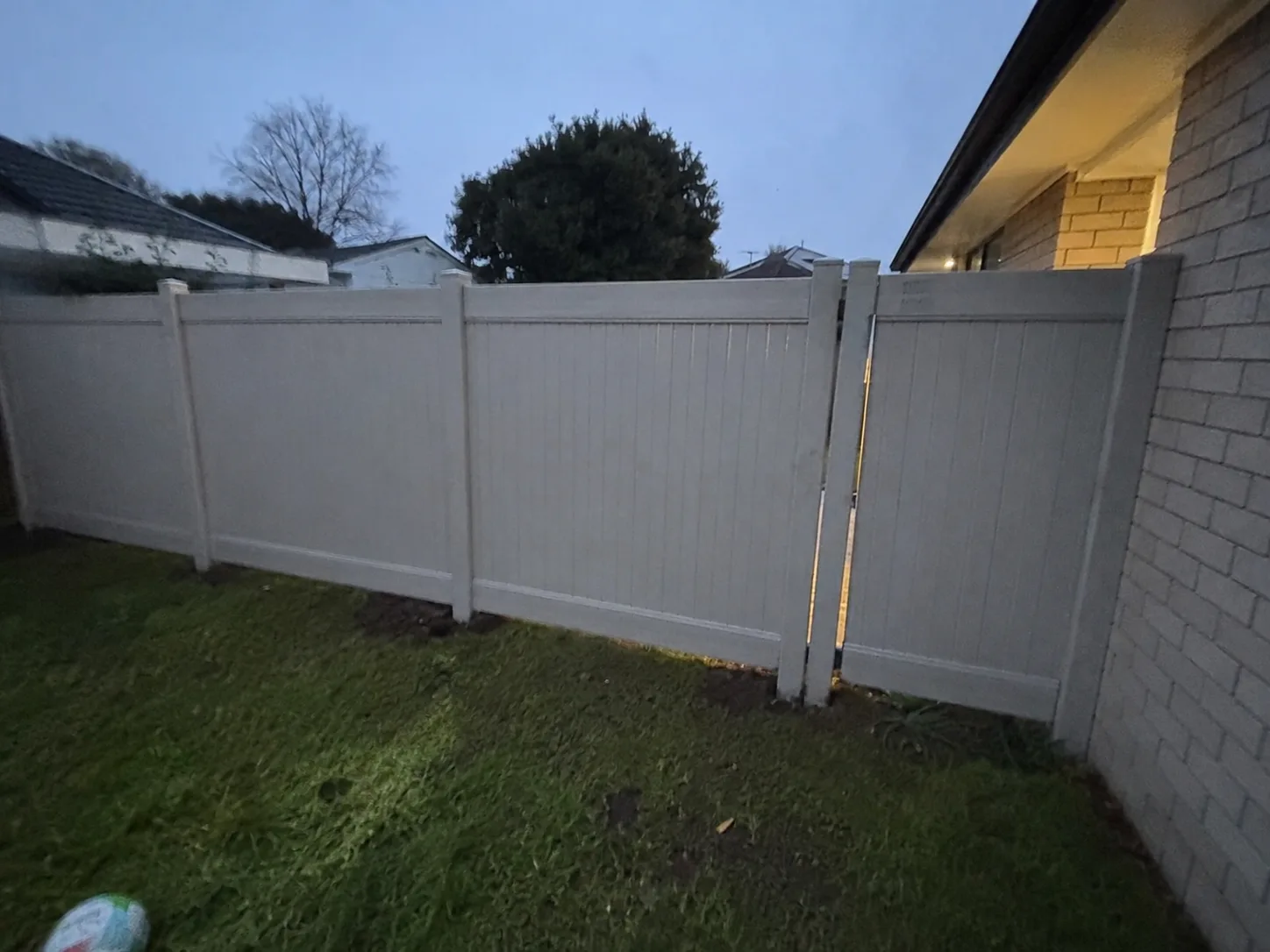
Supplied fencing photographs. Confirm the actual product, site details and compliance requirements for your project.
Where timber fencing works best
Timber fencing is commonly considered for privacy, boundaries, front yards, sloping sections. The right specification depends on the boundary purpose, wind exposure, soil, height, slope, access and whether the work forms part of a pool barrier.
Advantages
- Easy to customise on site
- Works well on changing ground levels
- Individual boards are repairable
Trade-offs
- Needs coating or planned weathering
- Movement and decay risk depend on detailing
- Life-cycle maintenance is higher than many metals
Styles and construction choices
Shortlist vertical paling, horizontal slat, board-and-batten, picket. Quotes should state posts and foundations, rails or frames, panel or board dimensions, treatment/coating, fixings, height, ground clearance, gate hardware, demolition and disposal.
Typical heights
Height should follow privacy and containment needs, but it must also be checked against Auckland planning controls, road-boundary visibility, overlays and—where relevant—pool barrier rules. Do not treat a product’s available height as proof it is permitted.
Auckland cost range
$150–$270 per lineal metre
Indicative installed planning range for a typical scope. A middle planning figure of about $205/m is used by the calculator before site multipliers. It is not a quote.
Factors that move the price
- Fence height, style density and post/foundation design
- Old fence removal, concrete breakout and disposal
- Slope, corners, rock, roots and buried services
- Restricted access and material handling distance
- Pedestrian, driveway or compliant pool gates
- Coating, staining and exposure-zone specifications
Maintenance and durability
Maintenance: Medium–high. Durability: Varies with treatment, detailing, exposure and maintenance. Ask suppliers to identify the product, exposure limitations, treatment or coating system and warranty conditions rather than relying on a generic lifespan claim.
Slope, coast and pool considerations
Slope: Excellent. Coastal Auckland: Specify treatment and fixings. Pool suitability: Possible when designed to F9. A pool barrier must be assessed as a complete system including gates, openings, climb zones and the immediate pool area.
Questions to put in every quote
- What exact materials, dimensions, treatments and coatings are included?
- Who confirms the boundary and checks services?
- Is demolition, disposal, GST and site reinstatement included?
- How are slope, corners and gate foundations handled?
- What documentation is supplied for regulated work?
Frequently asked questions
Is timber fencing the cheapest choice?
Not necessarily. Installed cost depends on the whole site and scope. Compare like-for-like quotes using the same height, gates, removal and finish.
Can it be used near the coast?
Specify treatment and fixings. Confirm the actual exposure category with the manufacturer or designer.
Can it follow a slope?
Excellent. Ask whether panels rake, step, or need custom fabrication.
Related options
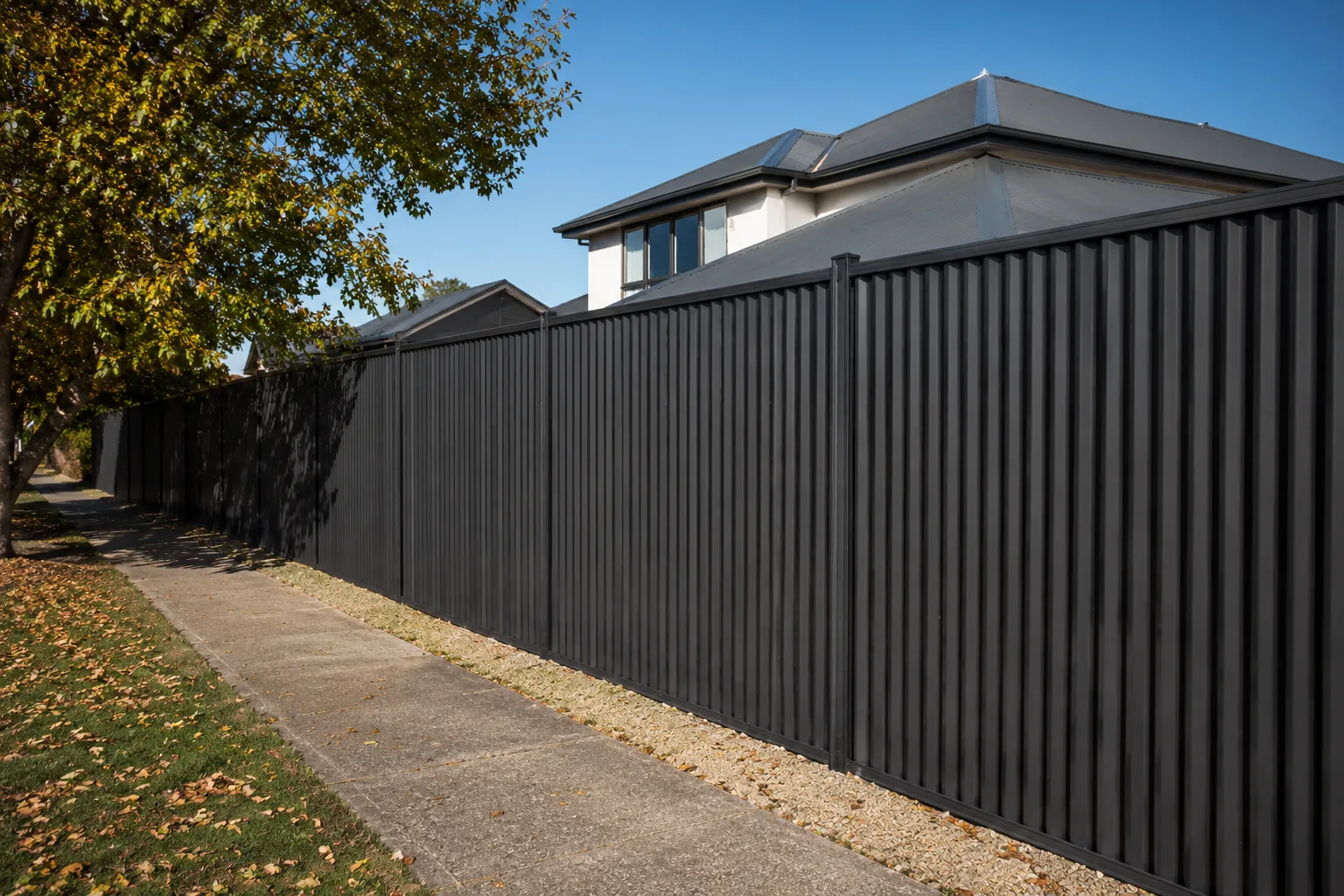
Build a timber decision path
For a price-ready specification, start with timber fence costs in Auckland, then set the frame using the post-spacing layout method and post embedment factors. The timber calculator converts those decisions into posts, rails, palings and concrete.
Compare ownership trade-offs in Timber vs PVC, Timber vs Aluminium and Timber vs coated steel. For privacy, connect board layout to the privacy-fencing options; for older work, check repair versus replacement services.
Relevant Auckland context
Sloping sites need a raked, stepped or individually cut-paling decision. Coastal work needs compatible fixings, drainage and an explicit coating/maintenance brief. See the North Shore and West Auckland area guides without assuming every property shares the same condition.
Contractors listing timber work
Browse public-source Auckland fencing contractors and verify current service area, availability, insurance and exact timber scope before requesting an itemised quote.
Specify the timber assembly
A useful quotation names every structural layer: H4 treated posts for ground contact, H3.2 rails and palings where applicable, sizes, post centres, rail count, paling cover, cap, fixings and concrete assumptions. Treatment class does not replace drainage and detailing; keep timber clear of trapped soil and show how cut ends and penetrations are handled.
| Decision | Common option | Why it changes the result |
|---|---|---|
| Board arrangement | Butted, overlapped or spaced | Privacy, movement and material quantity |
| Top line | Level, stepped or follows grade | Post lengths and cutting on slopes |
| Finish | Weathering, stain or paint | Preparation and maintenance cycle |
| Visible face | Rails one side or alternating | Boundary agreement and appearance |
From site visit to written scope
Mark corners, gate openings, level changes, services, vegetation and access. Ask whether demolition includes old concrete and disposal. Require any rock excavation or concealed decay to be photographed and approved before a variation. A good timber quote makes the frame, finish and exclusions visible enough that another contractor can price the same fence.