Timber fencing vs PVC fencing
Timber offers natural texture and easy customisation; PVC trades that character for lower routine coating maintenance.
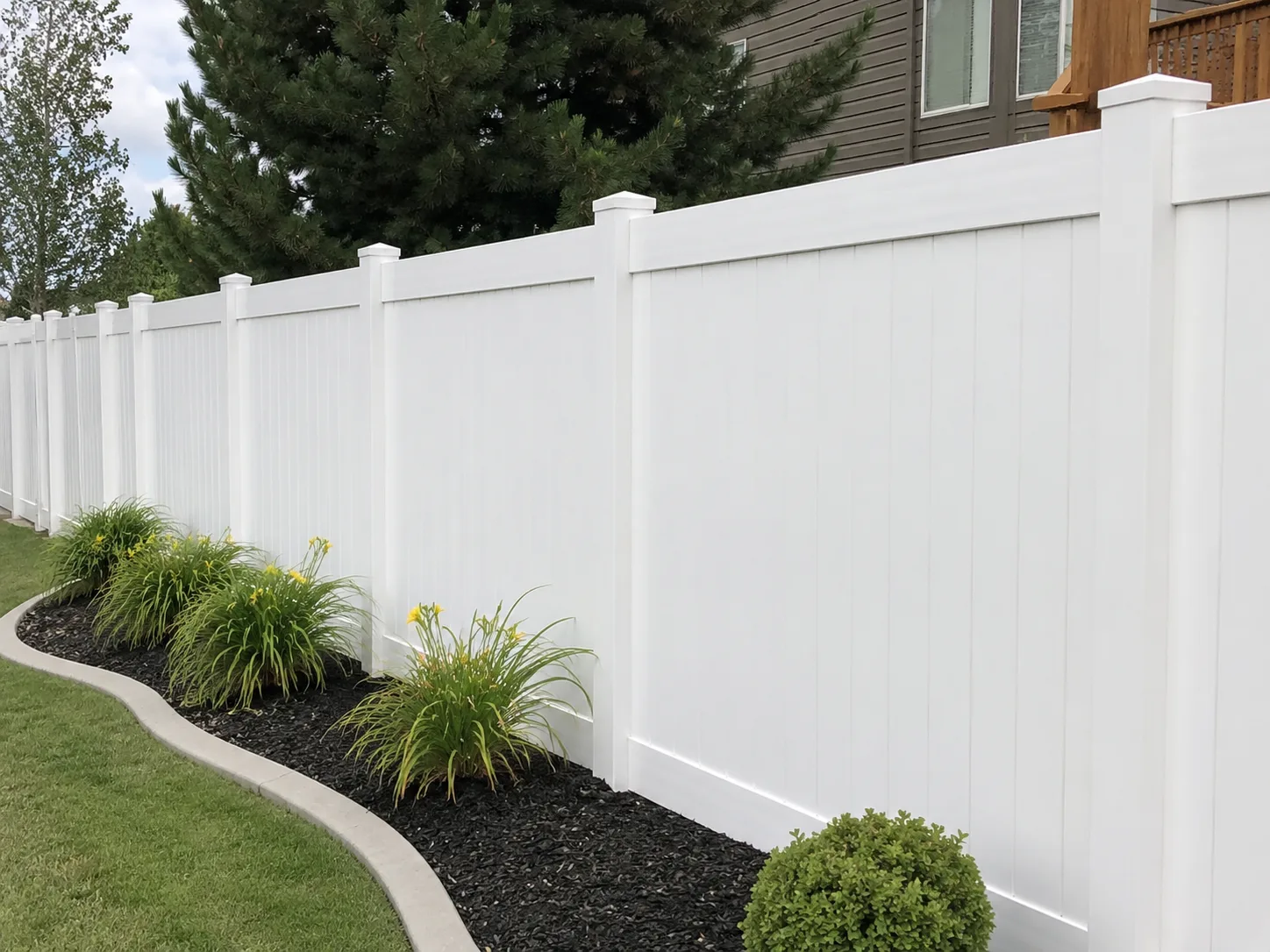
Reviewed: 12 August 2026. Choose timber when site-built flexibility, natural character and straightforward local board repair matter most. Choose PVC when a consistent solid finish and avoiding routine repainting are stronger priorities. Neither is automatically cheaper over the life of every Auckland boundary.
| Decision factor | Timber paling | PVC system |
|---|---|---|
| Installed planning range | $150–$270/m | $220–$430/m |
| Privacy | Close board, overlap and height can be tailored | Privacy panels provide consistent closure |
| Sloping ground | Individual boards adapt well to irregular levels | Usually stepped or raked within system limits |
| Finish | Natural weathering, stain or paint | Integral manufactured colour; no timber coating cycle |
| Local repair | Individual palings and rails are commonly replaceable | Repair depends on compatible profiles and supplier support |
| Movement | Boards can shrink, cup or split | Thermal movement and correct panel clearances matter |
| Coastal detail | Treatment, drainage and compatible fixings | PVC avoids sheet-metal corrosion; hardware still needs exposure suitability |
Price the same privacy outcome
The current structured midpoint is $205/m for timber and $310/m for PVC, but a fair comparison needs the same finished height, net length, privacy, gates, removal and access. A basic gapped timber fence is not equivalent to a full PVC privacy panel. Board-over-board timber, capping, paint and additional rails can close the initial price gap.
Ask the PVC supplier to identify panel profile, rail reinforcement where used, posts, wind/exposure assumptions and replacement-component availability. Ask the timber contractor for post centres, treatment, rails, paling profile, fixings and finish. Use the cost calculator for site variables, then obtain measured quotes.
Appearance and property context
Timber can sit naturally beside villas, established gardens and irregular boundaries. Vertical palings can be cut individually on a slope, while custom caps, battens and mixed-width boards change the character. The trade-off is visible variation: knots, movement and weathering are part of the material unless a coating system creates a more uniform finish.
PVC provides repeated manufactured profiles and a clean, consistent surface. It can suit contemporary homes, coastal gardens and owners who do not want a paint or stain cycle. The appearance is unmistakably a manufactured panel, and larger changes usually depend on the system’s available components rather than site carpentry.
Maintenance is different, not absent
A timber maintenance plan may include washing, mould treatment, checking ground-line decay and fasteners, replacing boards, and renewing stain or paint. Frequency depends on coating, colour, exposure and detailing; do not accept one universal lifespan. H4 treatment is typically associated with ground-contact fence posts and H3.2 with weather-exposed above-ground rails and palings, but treatment does not eliminate inspection or moisture-detailing needs.
PVC does not rot like timber and does not need a timber paint system. It still needs cleaning, gate adjustment and checks for impact damage, loose components and hardware corrosion. Confirm which cleaners are permitted and whether a damaged panel, rail or post can be sourced in the same profile and colour years later.
Wind, posts and solid panels
Both close-board timber and PVC privacy panels present a substantial area to wind. The safe solution depends on height, exposure, post system, footing, ground and panel design. PVC should follow the manufacturer’s installation requirements; timber member sizes and centres should match the proposed fence rather than a generic rule of thumb. An exposed ridge or coastal property may require a more conservative system than a sheltered urban side boundary.
How each system handles damage
Timber’s repair advantage is local familiarity: a damaged paling can often be removed without replacing an entire bay, and rails or posts can be repaired with commonly available sections. Colour matching may be imperfect, and a “small repair” can reveal wider decay.
PVC can be easy to clean after superficial marking, but impact damage may require a proprietary rail, panel or post. Ask for the exact system name, warranty documents and component supply route. A product-backed replacement path is more useful than a broad “low maintenance” claim.
Scenario recommendations
Irregular sloping rear boundary
Choose timber. Site-cut palings and rails usually adapt more naturally to frequent level changes, tree roots and non-standard transitions. Confirm the top-line design and drainage at the base.
Flat suburban privacy run for an owner avoiding repainting
Choose PVC if the selected system is documented for the site exposure and replacement components are available. Include gates and end transitions in the same product decision.
Rental where local repairs matter
Lean timber when the owner prioritises inexpensive individual board repairs and has a realistic coating/weathering plan. PVC may still win if cleaning and consistent appearance are more important than component-independent repair.
Highly exposed coastal property
Do not decide from material label alone. Compare the engineered or manufacturer-supported post/footing system, wind permeability, fixings, hardware and maintenance. An open aluminium system may be a better third option if full privacy is not essential.
Choose another material when
Consider aluminium for a visually open, low-coating-maintenance front or pool-style boundary. Consider coated-steel panels for a thin solid screen where the documented product and exposure conditions fit. For the complete range, see Privacy Fencing Auckland.
Decision summary
- Timber: best fit for irregular sites, custom detailing and repair with common local materials.
- PVC: best fit for a consistent privacy system where coating avoidance and supplier-backed components matter.
- Before choosing: match height, length, gates, demolition, access, wind assumptions, foundations and GST across both quotes.
Review detailed options on Timber Fencing Auckland and PVC Fencing Auckland. When the preferred specification is clear, request comparable site quotes through the quote form.
Price sources: Superior Property Services 2026 Auckland guide; TradieSync cross-check and Current Auckland PVC supplier/installer market review, checked 12 August 2026. Timber treatment context: NZ Timber Preservation Council.