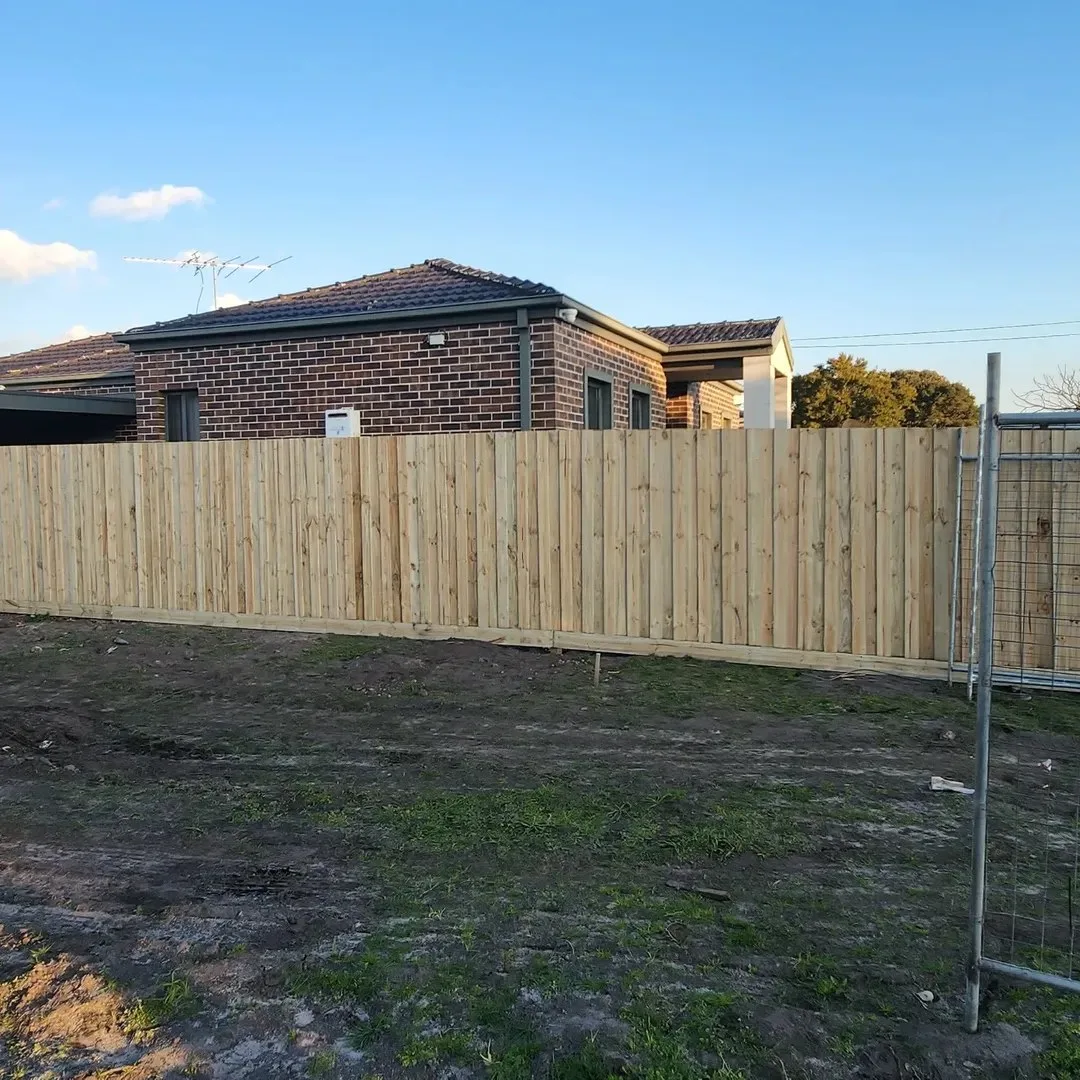
Pricing checked: 12 August 2026. The current structured planning range for an installed Auckland timber paling fence is $150–$270 per lineal metre, with $205/m used as a midpoint for a straightforward 1.8 m run. Removal, gates, coating and unusual foundations are excluded unless a quote says otherwise.
A timber fence quote is a construction specification expressed as a price. Two contractors can both quote “1.8 metre paling fence” while allowing different post sizes, post centres, rail counts, paling thicknesses, foundations and finishes. Compare those parts before deciding that one metre rate is cheaper.
What the installed metre rate should describe
The rate normally covers a repeatable section of fence: setting out, posts and concrete, horizontal rails, palings or boards, fixings and installation labour. It should identify the finished height and whether the boards are butted, gapped, overlapped, alternating or installed on both faces. Capping and trellis are separate unless named.
| Element | Questions for the quote | Why the cost changes |
|---|---|---|
| Posts | Section, treatment, centres, hole and footing assumptions | More or larger posts add timber, excavation and concrete |
| Rails | Number, section, treatment and jointing method | Taller fences and heavier boards may need more support |
| Palings | Profile, thickness, width, cover or gap, treatment | Board-over-board privacy uses materially more timber and fixings |
| Fixings | Nail or screw type and compatibility with treated timber/exposure | Corrosion-resistant specifications can cost more but avoid premature failure |
| Top/finish | Cap, trellis, paint, stain, number of sides and preparation | Coating is priced by surface area and access, not just lineal metres |
Timber treatment belongs in the price schedule
BRANZ and the New Zealand Timber Preservation Council identify H4 treatment for typical fence posts in ground contact and H3.2 for typical above-ground rails and palings exposed to weather. Treatment class addresses decay exposure; it does not prove that a post section, footing or span is structurally suitable. Ask the supplier or installer to identify treatment and product grade, and ensure freshly cut or drilled areas are handled in accordance with the timber supplier’s instructions.
For a coastal or highly exposed site, the timber treatment is only part of the durability decision. Fixing material, water traps, ground clearance, cut ends, coating and the design’s ability to dry all affect maintenance. Read the timber fence lifespan guide before comparing a low-maintenance claim.
Height changes more than the paling length
A taller fence catches more wind and may require a different post, rail and foundation design. It also uses longer palings, increases the area to paint or stain, and can make access from ladders or platforms slower. Do not scale a 1.2 m front fence rate to a 1.8 m privacy fence by adding only the extra board length.
Post spacing is similarly not a universal cost-saving lever. Wider centres reduce post and footing count but increase rail spans and panel loads. The post-spacing guide explains the layout calculation; the final choice should follow the proposed system, height, exposure and ground conditions.
Site work that sits outside the base run
- Existing fence: dismantling boards or mesh is different from extracting posts and concrete. Disposal should identify treated timber, metal and hardfill.
- Access: narrow side paths, stairs and distant parking increase hand-carrying of posts, concrete and spoil.
- Ground: roots, old footings, rock, soft fill and buried services affect excavation and may require a provisional allowance.
- Slope: a site-built timber fence can follow changing ground well, but every paling may need an individual cut and the top line must be agreed.
- Retaining interfaces: a fence fixed to or above retaining needs a coordinated design; a fence post should not be assumed to act as a retaining-wall post.
- Finishing: preparation, coating system, colour, number of coats and whether both faces are accessible must be written down.
Three illustrative Auckland budgets
Illustrative planning example 1 — 17.5 m side boundary: at the structured midpoint, 17.5 × $205 gives a base run of $3,587.50. A contractor may round quantities and price full timber lengths, so the quotation will not necessarily equal that arithmetic. Add removal, finish and openings separately.
Illustrative planning example 2 — 24 m privacy replacement on a slope: the same midpoint produces $4,920 for new repeatable fencing. The real comparison must then add old post/concrete extraction, stepped or cut-board labour, spoil movement and any stain. A higher per-metre offer may include those tasks while a lower one excludes them.
Illustrative planning example 3 — 11 m front fence with a pedestrian gate: a low front boundary may use less timber than a tall privacy fence, but mobilisation and a framed gate have fixed costs. Price the 11 m run and the gate independently; otherwise the short project will appear to have an unusually high metre rate.
Painting and staining
Leaving finish out of the installation quote does not make it free. New timber moisture condition, surface preparation, product choice, board faces and access determine the coating scope. Resene’s fence guidance distinguishes the preparation and maintenance implications of paint and penetrating stain. If finish is included, ask for product, preparation, coats, colour, sides and timing. If it is excluded, use the painting and staining cost guide to build a separate allowance.
A timber quote schedule worth comparing
- Net fence length, finished height and marked line.
- Post size, treatment, centres, embedment/foundation design and ground assumption.
- Rail number, dimensions, treatment, joints and fixings.
- Paling profile, dimensions, treatment, gap or overlap and orientation.
- Cap, trellis, transitions, corners and every gate opening.
- Demolition, concrete removal, vegetation, disposal and reinstatement.
- Coating scope, GST, programme, payment stages, warranties and exclusions.
Use the timber fence calculator to test posts, rails and paling quantities, then model site variables in the cost calculator. Compare appearance and ownership trade-offs in timber vs PVC and timber vs aluminium. The Timber Fencing Auckland page connects the specification to relevant contractors and project uses.
Sources and limits
Price record: Superior Property Services 2026 Auckland guide; TradieSync cross-check, checked 2026-08-12. Treatment references: BRANZ timber treatment and NZ Timber Preservation Council treatment guidance. Finish reference: Resene fence maintenance guidance. Planning ranges cannot replace a measured site quotation.