Fence height rules in Auckland
There is no single safe height rule for every Auckland site. Zone standards, road boundaries, overlays, retaining, sightlines and the Building Act can all change the answer.
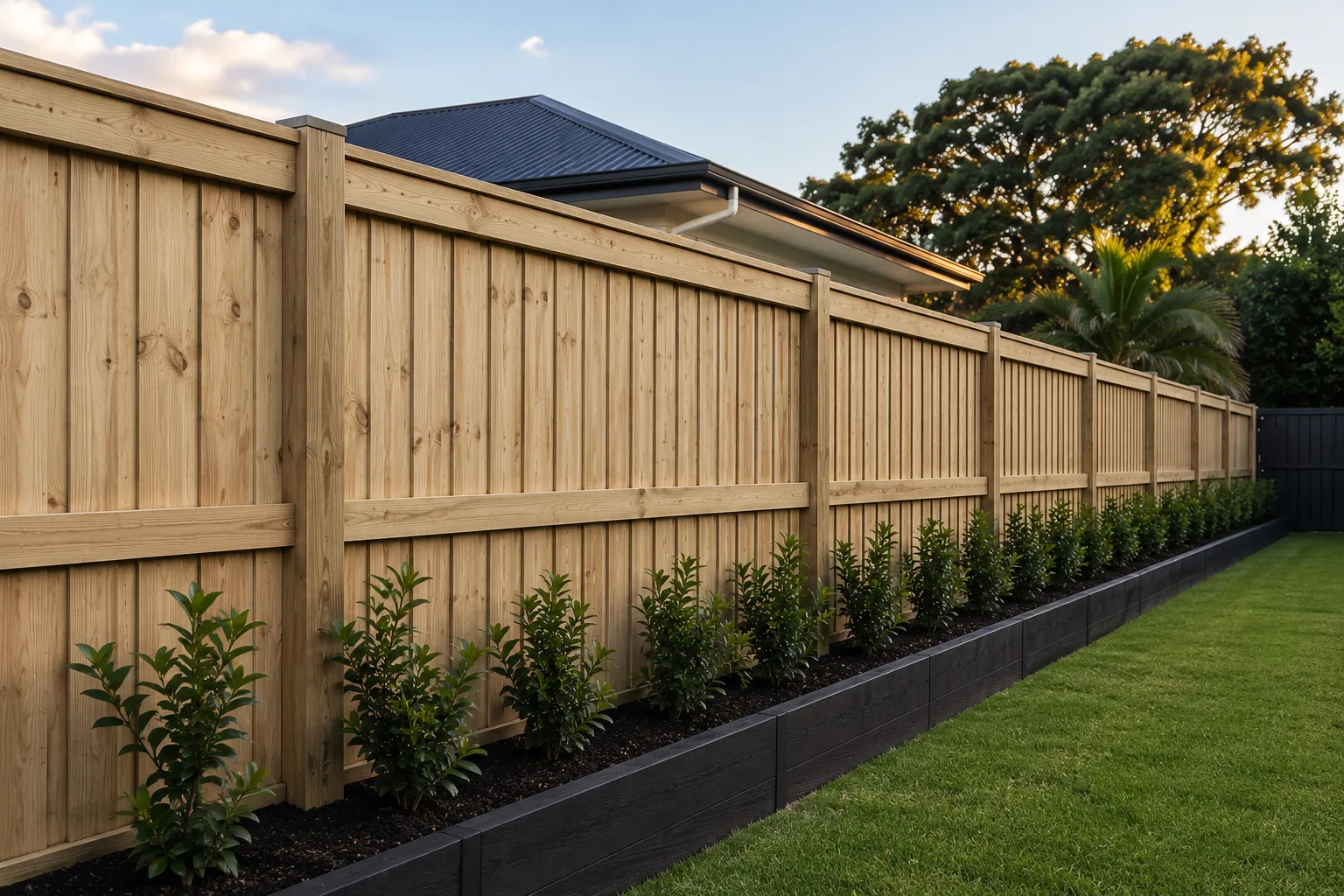
Last reviewed: 2026-08-12. There is no single fence-height rule that makes every Auckland fence lawful. The often-quoted 2.5 m figure is a national building-consent exemption for ordinary fences and hoardings; Auckland planning controls, pool-barrier requirements, road visibility, overlays, consent notices and combined retaining structures can still produce a different answer.
The four height questions
| Question | Primary authority | What it decides |
|---|---|---|
| Is building consent required? | Building Act Schedule 1 / MBIE guidance | Whether the proposed building work falls within the fence exemption |
| Does the Auckland Unitary Plan permit it? | Auckland Council planning rules | Zone, road-boundary, permeability, overlay, precinct and site standards |
| Is it a residential pool barrier? | Building Act and Building Code F9 | Barrier and gate performance; ordinary-fence exemption does not apply |
| Are private or boundary obligations involved? | Title instruments, Fencing Act and agreements | Location, contributions, covenants and neighbour process |
What the 2.5 metre exemption actually says
MBIE’s current exempt-building-work guidance states that building work connected with a fence or hoarding not exceeding 2.5 m above the supporting ground is covered by Schedule 1 exemption 21. Height is measured vertically from the top of the structure to the supporting ground directly below. A fence that steps across a slope must therefore be checked at the relevant ground beneath each part, not from one convenient end.
The exemption excludes a fence or hoarding used to restrict access to a residential pool. It also does not erase the duty for exempt building work to comply with the Building Code where applicable. Building consent and resource consent are separate systems: a fence may be exempt from building consent and still need planning approval.
Auckland planning controls commonly become the real limit
Auckland Council’s “Build a fence” guidance directs owners to check resource-consent requirements as well as building consent. Residential zone standards commonly address fences near road boundaries and may combine maximum height with visual-permeability requirements. The exact rule depends on the property’s zone and can be altered by an overlay, precinct, designation, consent notice or previous resource consent.
Do not rely on a neighbour’s fence or a product sold in a standard 1.8 m or 2.0 m height. Existing work may have a consent, may pre-date a rule, may be non-compliant, or may sit in a different planning context. Use Auckland Council’s property and Unitary Plan tools, then ask the council to confirm the relevant standard if the proposal is close to a limit.
Road boundaries and driveways
A solid tall fence at the street can affect streetscape and visibility. Planning standards may require a lower or more visually open treatment at a road boundary. Separate from planning permission, driveway sightlines should be considered so drivers and people on the footpath can see one another. Kāinga Ora’s public fence specifications, for example, recommend lower or see-through treatment near driveways to improve visibility; that is useful design guidance, not a substitute for checking the Auckland rule applying to a private property.
Retaining walls change how height is understood
A fence above a retaining wall is not always assessed as an isolated fence. The supporting ground, total fall risk, wind load and structural relationship matter. A boundary arrangement that combines retained ground and a privacy screen can require building or engineering advice even when the visible fence panel is modest. Show existing and proposed ground levels on the section drawing rather than quoting only “fence height”.
Pool barriers use their own compliance pathway
For a residential pool, Building Code F9 and the Building Act provisions control the barrier. Current MBIE guidance says pools capable of holding 400 mm or more of water require a compliant barrier, subject to specific provisions for qualifying small heated pools. Barrier layout, minimum dimensions, climbability and a self-closing, self-latching gate matter together. See Pool Fencing Auckland regulations rather than applying the ordinary 2.5 m exemption.
Examples: why the answer changes
1.8 m rear timber privacy fence
It may sit comfortably within the national building-consent exemption, but the owner still needs to confirm planning controls, the legal boundary, any covenant and whether retaining or pool use changes the proposal.
2.1 m solid fence at the street
The height may still be below 2.5 m, yet road-boundary height or permeability standards can make resource consent the relevant question. Treating it as “under 2.5 m, therefore permitted” would confuse the two approval systems.
1.2 m aluminium pool barrier
The height resembles a low front fence but its function is different. It must be assessed as a pool barrier, including the gate and immediate pool area, and the ordinary fence exemption specifically excludes it.
1.8 m fence above a retaining edge
The proposal needs a section showing ground levels and the retaining relationship. Height above one side, fall protection and structural load may all require specialist consideration.
Information to have before asking Council
- Property address, zone, overlays, precincts and relevant title/consent notices.
- A plan showing the boundary, road, driveway, pool, retaining and nearby structures.
- Finished height at changes of ground level, plus material and visual permeability.
- Existing and proposed ground levels where retaining is involved.
- Whether the fence is part of a residential pool barrier.
Once the permitted envelope is clear, compare the effect of height on privacy and wind in Choosing Fence Height. Then model material and height in the Auckland fence cost calculator or review timber, aluminium and privacy fence systems.
Authoritative sources
- MBIE Building Performance — fences and hoardings exemption
- Auckland Council — Build a fence
- MBIE Building Performance — F9 residential pool safety
General information only. Site facts and current official rules determine the result; seek Council or qualified professional advice where the proposal is uncertain.