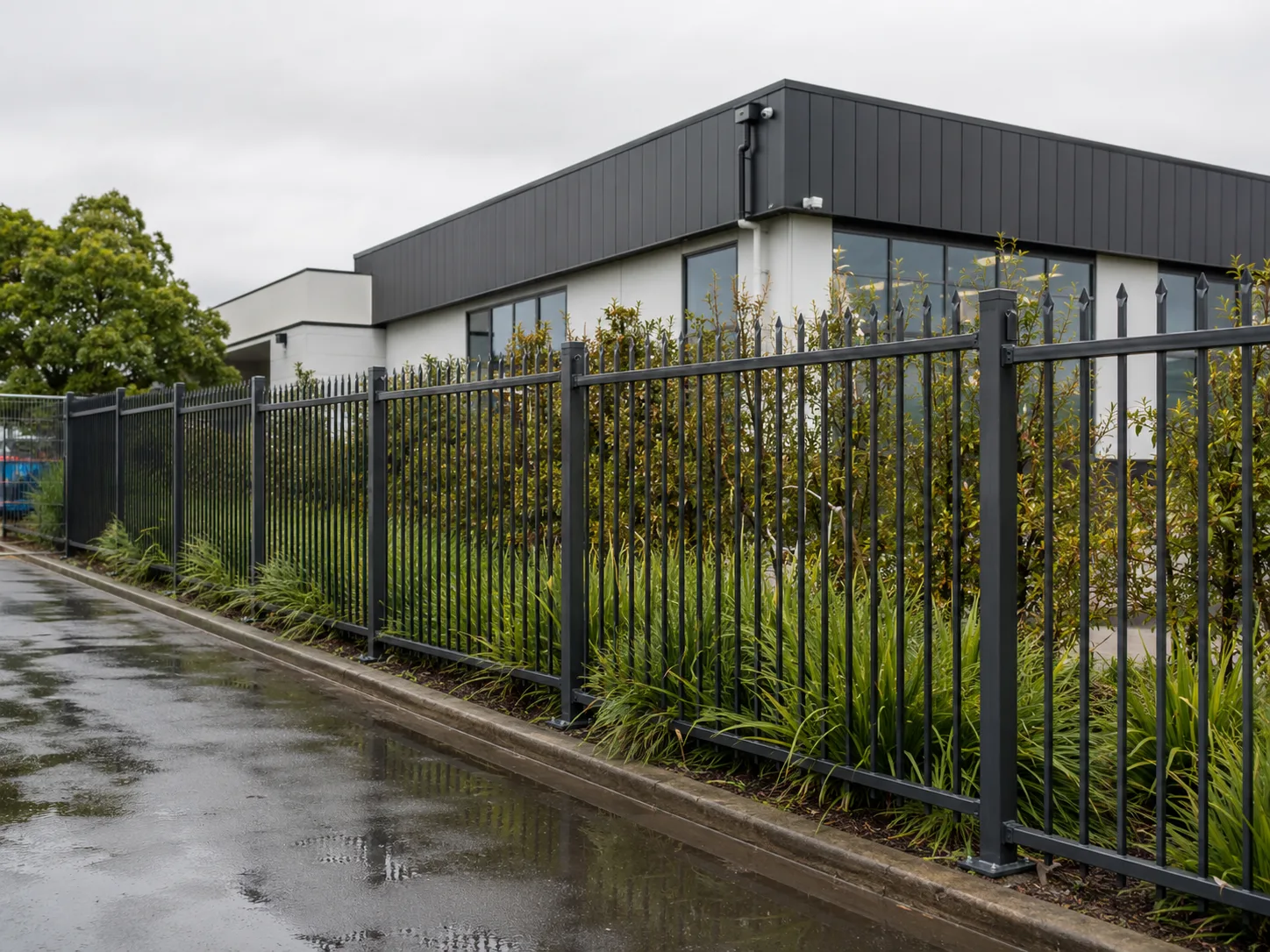
Reviewed: 12 August 2026. Modern appearance comes from proportion, alignment and detailing more than a single material.
A modern fence reads as a composition: consistent bays, deliberate gaps, controlled junctions and a gate that aligns with the infill. The most common failure is selecting a slat profile before resolving posts, slopes, services and the street relationship.
Vertical battens
Narrow vertical timber or aluminium battens make level changes less obvious and suit tall narrow proportions. Specify the clear gap, face width, frame colour and which side shows fixings. At a front boundary, openness can preserve surveillance; at a privacy boundary, staggered or denser layouts may be required.
Horizontal slats
Horizontal lines can make a short frontage feel wider. They also emphasise any sag or inconsistent stepping, so post and rail/frame stiffness matters. On slopes, decide whether slats rake, step or terminate in level modules. Avoid creating easy climbing rails where containment or pool safety matters.
Solid panels with framed openings
Coated steel or PVC provides a calm solid field. Introduce an open section near an entry or driveway only after checking visibility and structural junctions. Document cut edges, caps and the transition from panel rail to gate frame.
Mixed material palette
| Combination | Useful effect | Detail risk |
|---|---|---|
| Timber infill + dark metal posts | Warm face with crisp frame | Dissimilar fixings and timber movement |
| Aluminium slats + masonry piers | Architectural entry rhythm | Structural tolerances and consent |
| Solid panels + open gate | Privacy with visible arrival point | Misaligned heights and security gaps |
Detail checklist
- Equal bay logic and intentional end bay.
- Post caps, rail ends and drainage.
- Gate frame hidden or expressed deliberately.
- Service boxes, meters and letterbox access.
- Coating colour sampled beside house cladding.
- Future replacement path for proprietary components.
Compare aluminium fencing with timber fencing, then calculate the selected system in the materials calculator. For gate geometry, continue to Gates Auckland.
Modern is a proportion, not a material label
Clean contemporary fences rely on controlled spacing, aligned joints and a deliberate relationship between posts, infill and gates. Timber, aluminium, coated steel and mixed masonry systems can all work. The detail normally fails when too many slat widths, colours or cap profiles compete on one elevation.
Choose the expression
- Vertical rhythm: suits narrow frontages and makes stepped panels easier to resolve.
- Horizontal lines: can visually lengthen a run, but spans and movement need proper framing.
- Shadow gaps: provide depth and partial visibility; specify the clear gap, not only slat width.
- Mixed solid and open bays: concentrate privacy where needed while keeping entries and street edges lighter.
Details to resolve before fabrication
Align the pedestrian gate with adjacent infill, decide whether posts are exposed or concealed, nominate the view from both sides and show how the fence changes on a slope. Confirm mailbox, intercom, lighting and automation conduits before foundations are poured. Coastal sites also need coating and hardware selected for the exposure, as explained in the coastal fence guide.
Modern privacy is often better achieved with a short targeted screen than a uniformly dense boundary. Compare sightlines in the privacy guide and planning constraints in choosing fence height.