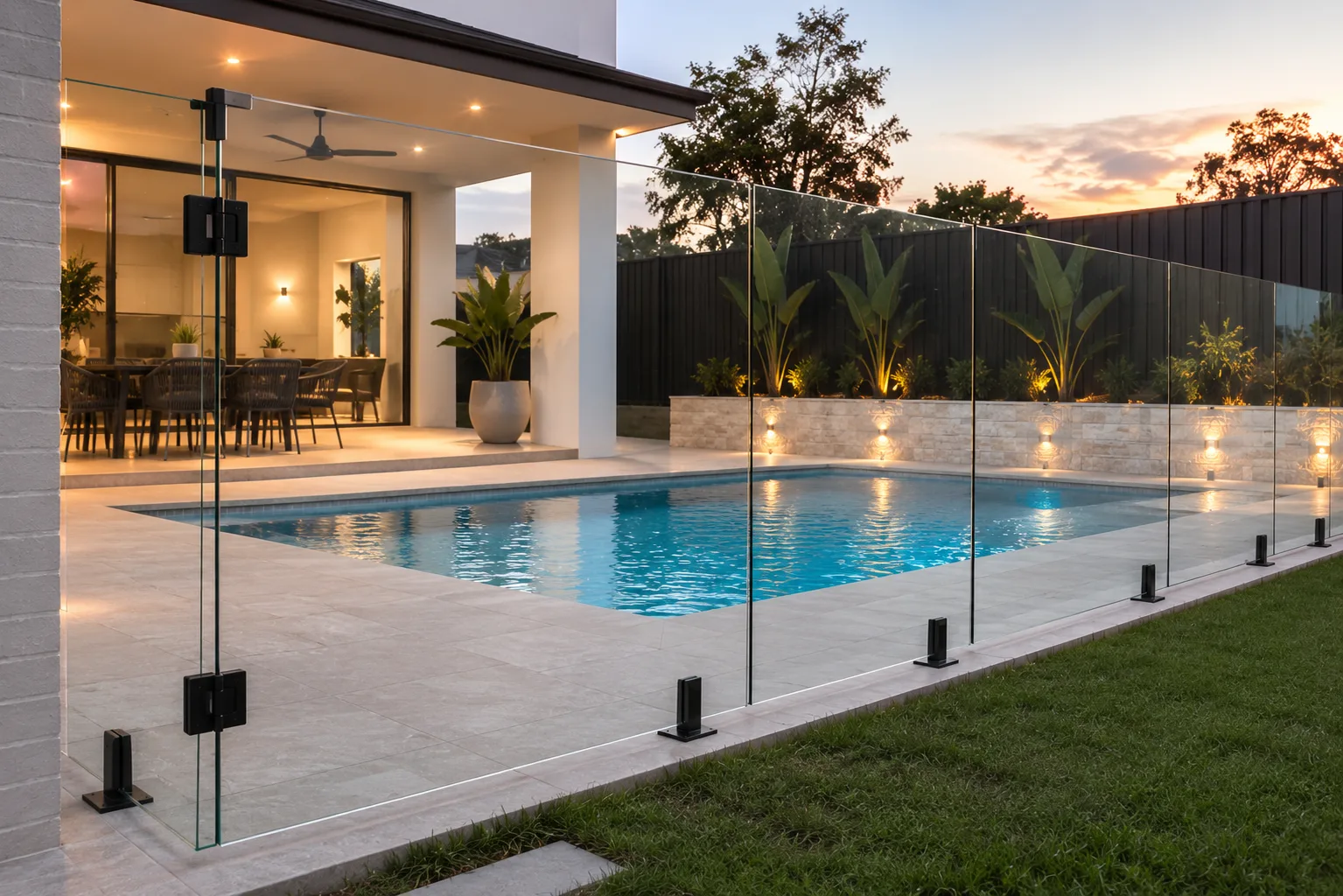
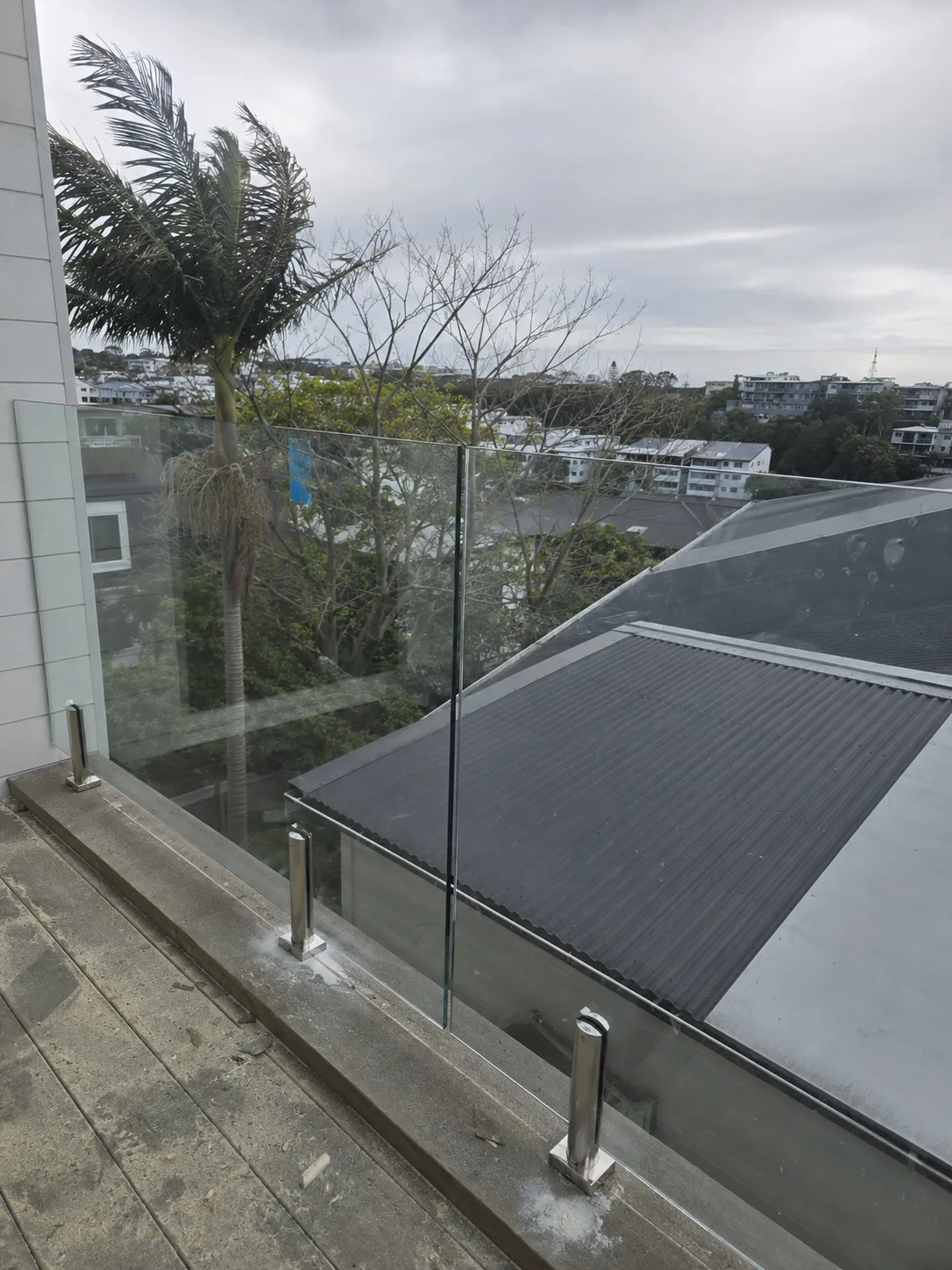
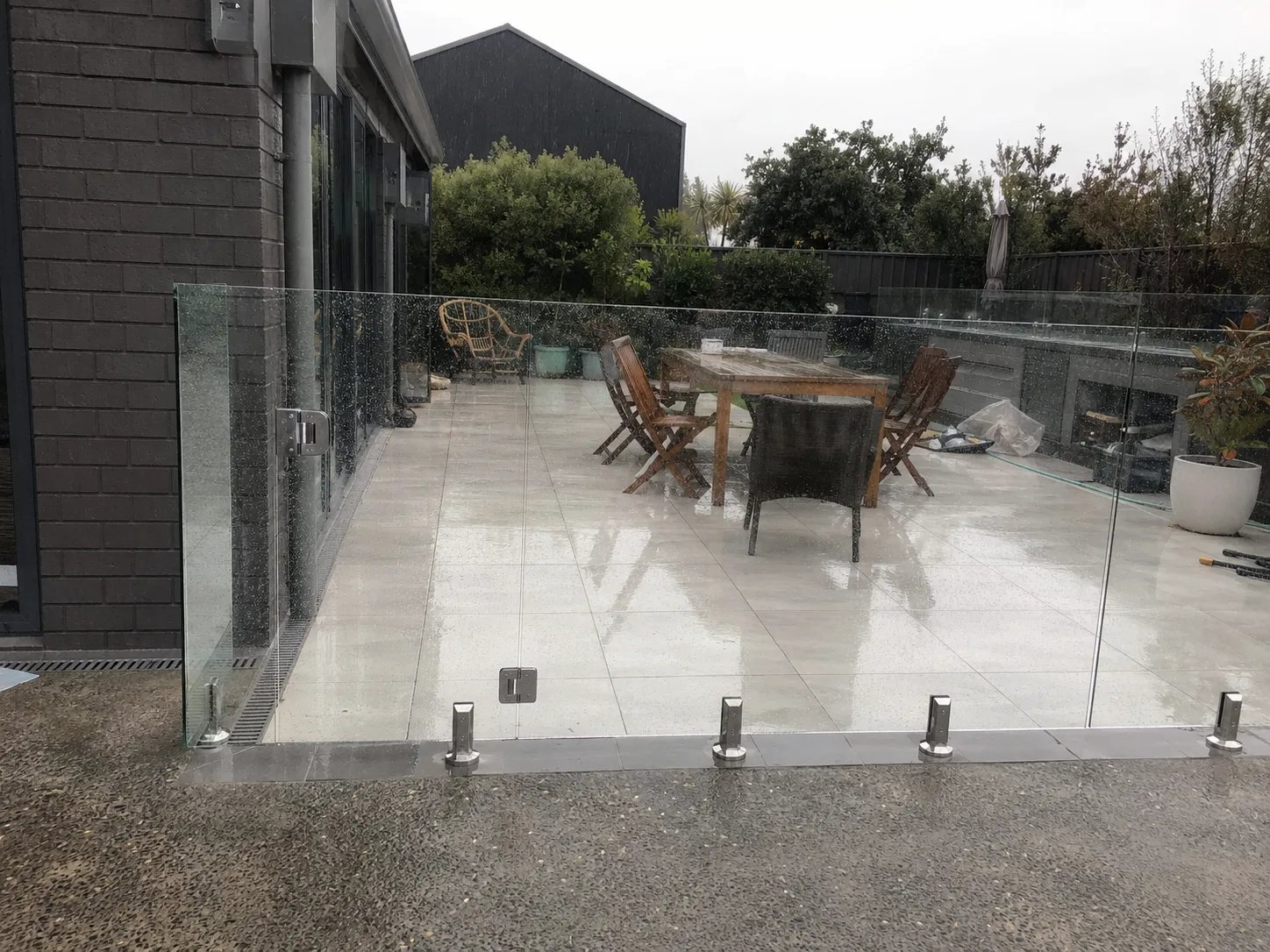
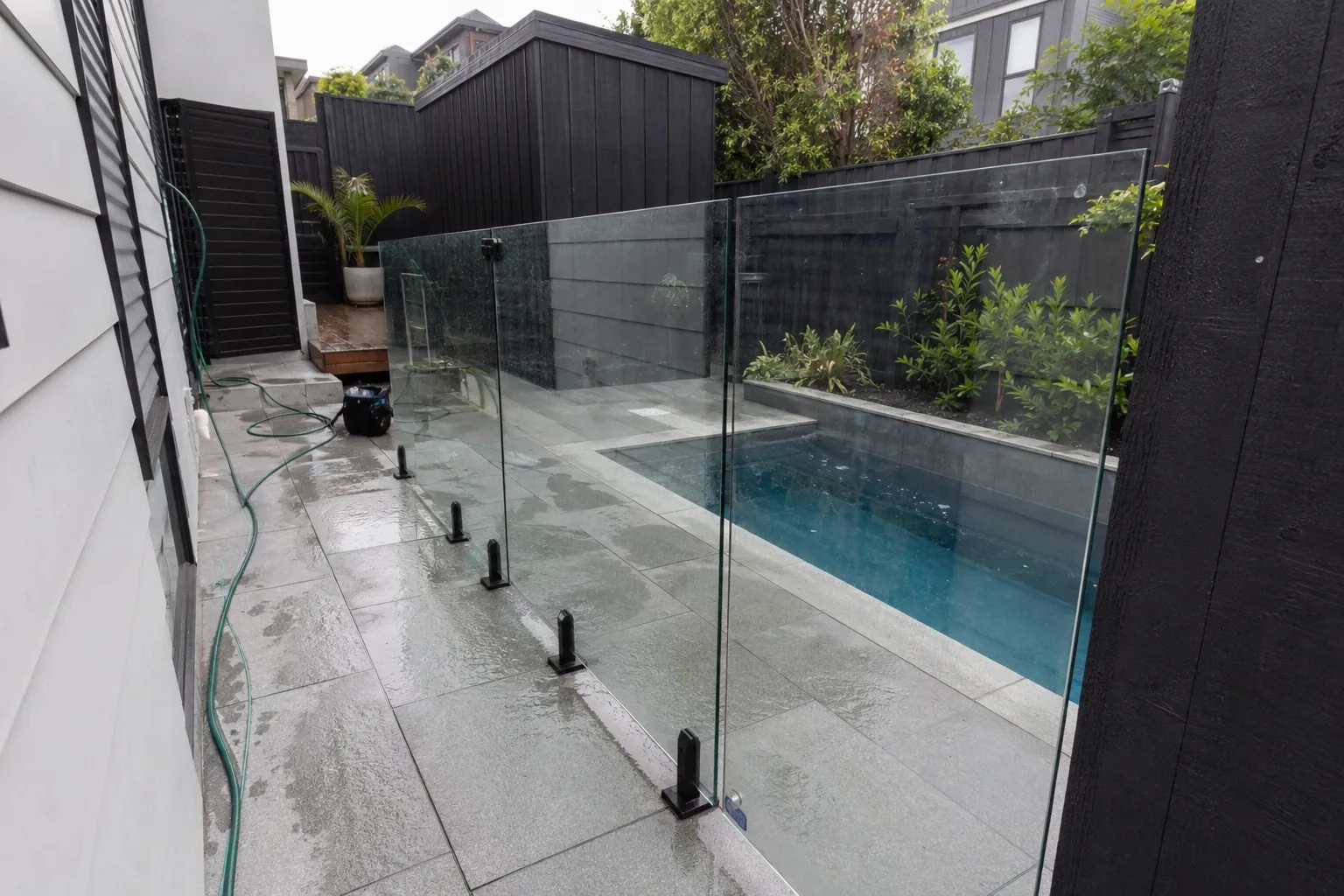
Supplied fencing photographs. Confirm the actual product, site details and compliance requirements for your project.
Where pool fencing works best
Pool fencing is commonly considered for residential pools, spas, immediate pool areas. The right specification depends on the boundary purpose, wind exposure, soil, height, slope, access and whether the work forms part of a pool barrier.
Advantages
- Multiple material choices
- Can preserve views
- Purpose-designed gate hardware
Trade-offs
- Building consent may be required
- Gate and climb-zone details are critical
- Three-yearly inspection regime applies
Styles and construction choices
Shortlist frameless glass, aluminium vertical, mixed glass and aluminium. Quotes should state posts and foundations, rails or frames, panel or board dimensions, treatment/coating, fixings, height, ground clearance, gate hardware, demolition and disposal.
Typical heights
Height should follow privacy and containment needs, but it must also be checked against Auckland planning controls, road-boundary visibility, overlays and—where relevant—pool barrier rules. Do not treat a product’s available height as proof it is permitted.
Auckland cost range
$220–$560 per lineal metre
Indicative installed planning range for a typical scope. A middle planning figure of about $360/m is used by the calculator before site multipliers. It is not a quote.
Factors that move the price
- Fence height, style density and post/foundation design
- Old fence removal, concrete breakout and disposal
- Slope, corners, rock, roots and buried services
- Restricted access and material handling distance
- Pedestrian, driveway or compliant pool gates
- Coating, staining and exposure-zone specifications
Maintenance and durability
Maintenance: Medium. Durability: System and exposure dependent. Ask suppliers to identify the product, exposure limitations, treatment or coating system and warranty conditions rather than relying on a generic lifespan claim.
Slope, coast and pool considerations
Slope: Site-specific. Coastal Auckland: Use appropriate hardware. Pool suitability: Purpose-built. A pool barrier must be assessed as a complete system including gates, openings, climb zones and the immediate pool area.
Questions to put in every quote
- What exact materials, dimensions, treatments and coatings are included?
- Who confirms the boundary and checks services?
- Is demolition, disposal, GST and site reinstatement included?
- How are slope, corners and gate foundations handled?
- What documentation is supplied for regulated work?
Frequently asked questions
Is pool fencing the cheapest choice?
Not necessarily. Installed cost depends on the whole site and scope. Compare like-for-like quotes using the same height, gates, removal and finish.
Can it be used near the coast?
Use appropriate hardware. Confirm the actual exposure category with the manufacturer or designer.
Can it follow a slope?
Site-specific. Ask whether panels rake, step, or need custom fabrication.
Related options
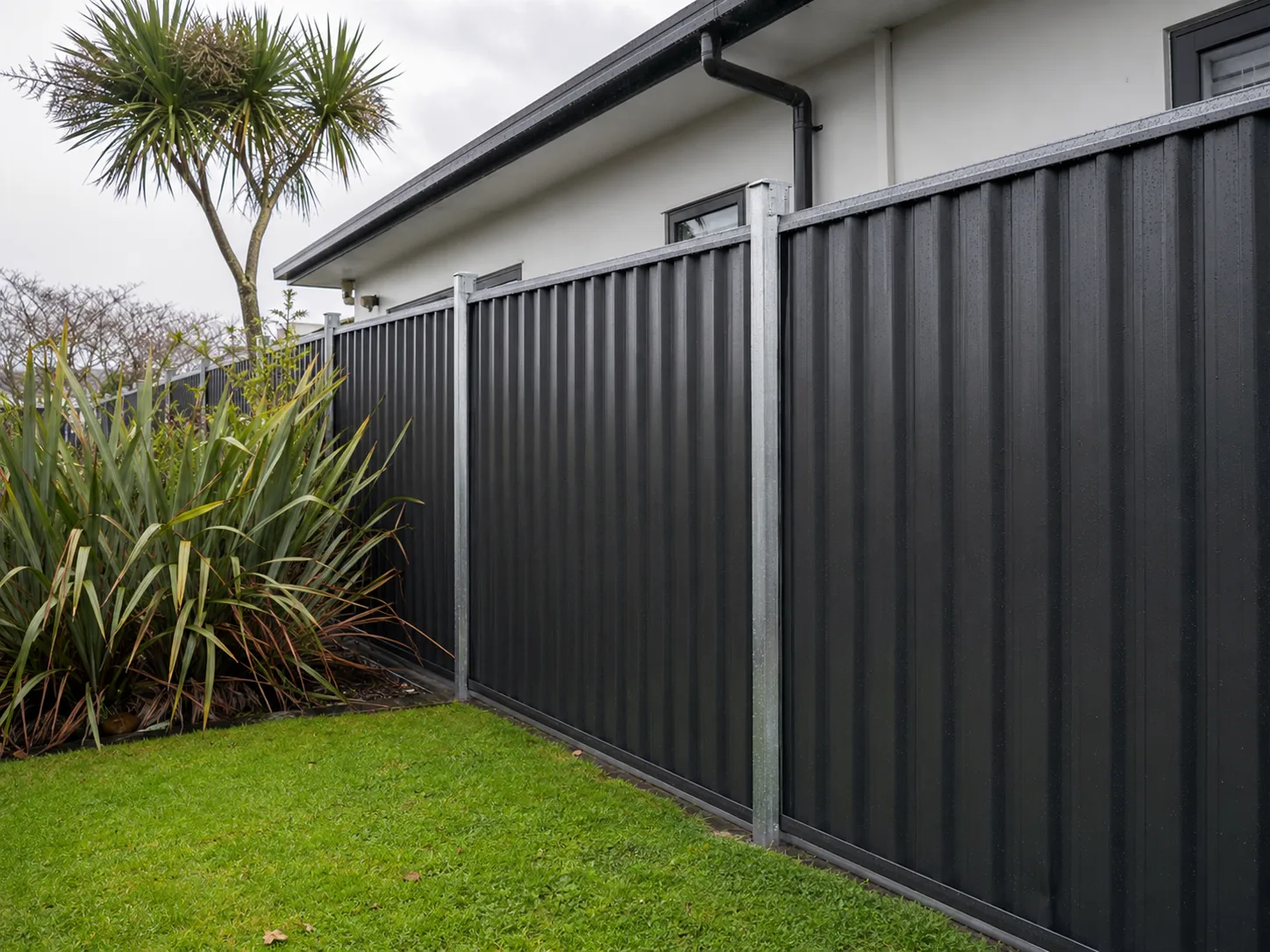
Plan the barrier as a complete system
Compare the view and maintenance trade-offs between glass pool fencing and aluminium systems, then use the original matrix at Glass vs Aluminium Pool Fencing. Price panels, gates, corners and substrate in the pool fence calculator.
The pool-fence cost model separates infill from gates, mounting surface, consent and documentation. Before a design is ordered, verify current Auckland pool-barrier requirements; a product label does not certify the installed barrier.
Find an appropriate contractor
The contractor directory records public-source service categories. Confirm that a contractor currently undertakes compliant pool work and clarify responsibility for design, consent and records before using the pool quote brief.
Design, installation and inspection must connect
The installer needs the approved barrier line, finished ground levels, gate direction and substrate information—not just a panel count. Glass fittings depend on concrete geometry and reinforcement; aluminium posts depend on foundations and spacing. Mixed barriers need careful transitions so openings and climbability remain compliant.
| Package | Confirm in writing |
|---|---|
| Design | Immediate pool area, barrier components and consent responsibility |
| Product | Panel/glass specification, supports, gate and documentation |
| Substrate | Slab, paving, waterproofing, drainage and unknown conditions |
| Completion | Inspection attendance, defect responsibility and owner records |
| Maintenance | Gate testing, cleaning and replacement-part availability |
Do not fill or use a pool on the assumption that an attractive new panel is a compliant barrier. Auckland residential pool barriers remain subject to ongoing three-yearly inspection and maintenance.