Aluminium fencing vs Steel fencing
Aluminium suits corrosion-conscious, lightweight residential systems; steel offers higher-strength security options when coating is correctly specified.
Reviewed: 12 August 2026. Strength and durability depend on alloy/steel grade, section, fabrication, coating, fixings and design—not material name alone.
| Factor | Aluminium | Steel |
|---|---|---|
| Planning cost | $180–$380/m | $190–$420/m |
| Weight | Lighter panels and handling | Heavier sections |
| Corrosion mode | Does not form ferrous rust; coating/galvanic details matter | Requires appropriate galvanising/coating and damage control |
| Strength/security | Suitable residential systems; design-specific | Common for high-strength welded/security systems |
| Repairs | Panel/slat replacement or specialist fabrication | Welded repair may require coating reinstatement |
| Gates | Lower leaf weight can reduce operating load | Robust frames but greater support demand |
Choose aluminium when
The project is residential, pool-related or coastal-conscious and does not need a heavy security specification. Demand a documented powder-coat and compatible hardware schedule.
Choose steel when
Threat resistance, welded fabrication, anti-climb geometry or high-duty commercial gates justify its strength. Specify galvanising/coating, weld treatment, foundations and maintenance.
Consider something else when
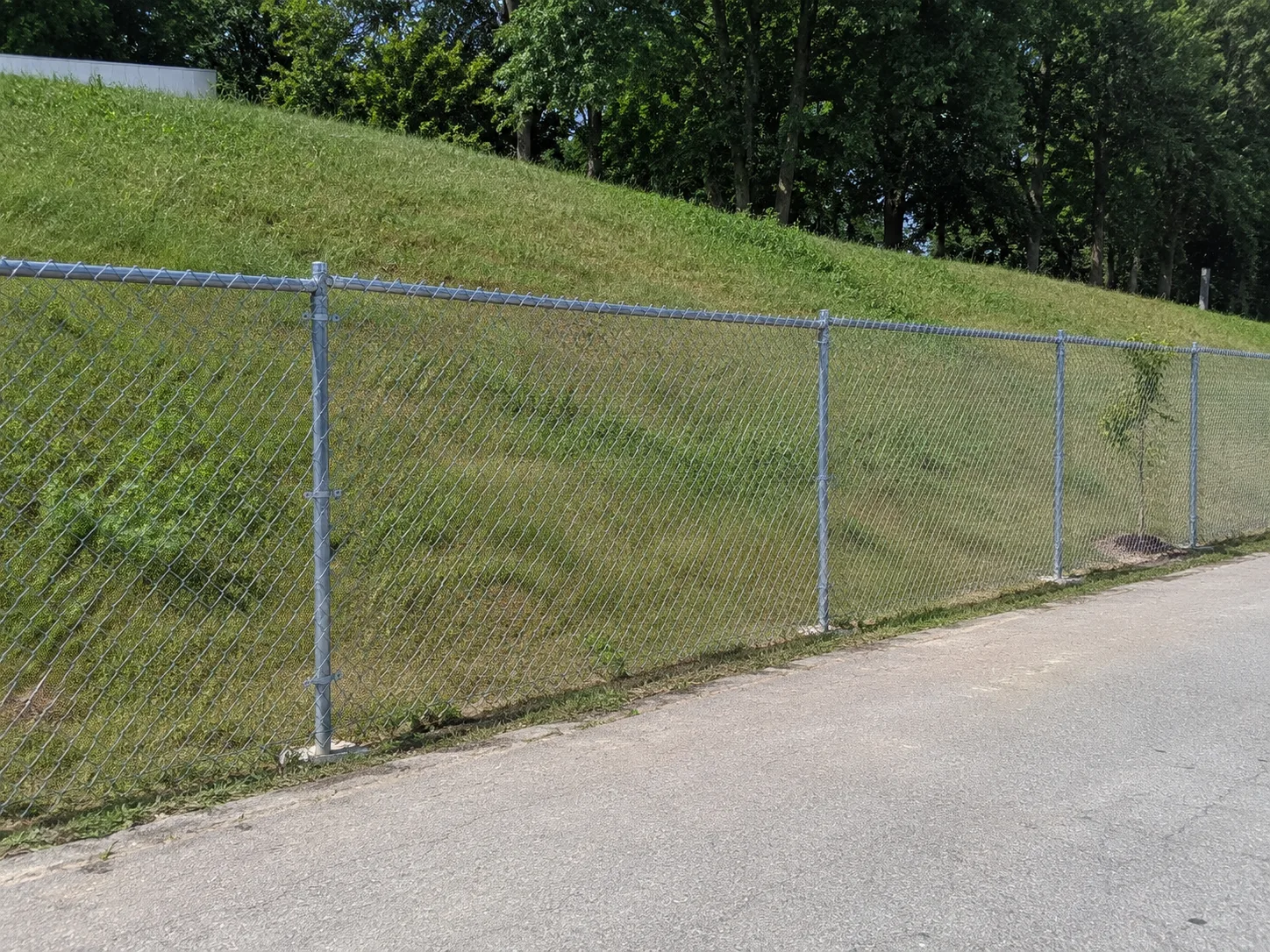
Chain-link may cover a long visible commercial boundary economically; solid coated panels may serve privacy; timber can adapt more easily to complex residential slopes.
Review security specifications, steel fencing and aluminium formats. For salt exposure, use the coastal material checklist.
The useful distinction is system weight and protection
Aluminium is light, naturally forms a protective oxide layer and is commonly supplied as powder-coated modular or fabricated panels. Steel is stronger and stiffer for a given section but depends more heavily on galvanizing, coating, drainage and repair of damaged protection. Neither label alone describes durability.
| Decision | Aluminium | Steel |
|---|---|---|
| Open residential boundary | Light, repeatable panels; broad style choice | Robust but often more capacity than needed |
| Dense privacy | Custom slats can become expensive and wind-sensitive | Sheet or fabricated systems offer opacity; detailing matters |
| Security | Suitable systems exist, but section and fixing must match threat | Often preferred for rigid anti-climb or welded designs |
| Coastal exposure | No ferrous rust, but coating and hardware still require care | Needs environment-appropriate zinc/coating system and maintenance |
| Modification | Light components; proprietary replacements may be needed | Fabrication is versatile; coating must be restored after work |
Current cost context
Residential aluminium is modelled at $180–$380/m, typical $275/m. General steel is modelled at $190–$420/m, typical $295/m. These ranges overlap because openness, fabrication and foundations matter more than the metal name. A security-grade steel scope can exceed the range.
Three address-specific choices
Urban front boundary: aluminium usually wins where a light open panel and low routine maintenance are priorities. Commercial service yard: welded or security steel often wins where impact resistance and access control are central. Marine frontage: compare complete coating, fastener and maintenance specifications; do not assume either material is maintenance-free.
Make quotes comparable
Specify section sizes, spacing, height, posts, foundations, fabrication method, galvanizing/pretreatment, powder-coat product, fasteners and cut/weld repair. Ask for the applicable environmental limitations and cleaning schedule in writing. See aluminium cost detail and coastal selection.