Last reviewed: 12 August 2026. The Fencing Act 1978 is current legislation. This page summarises a project process and is not legal advice.
A boundary fence project has two different foundations: the legal line and the cost-sharing process. A tape measure can quantify a run; it cannot resolve a disputed cadastral boundary. Likewise, a reasonable quote does not automatically create a right to recover half if the statutory or agreed process has not been followed.
Confirm what line is actually being fenced
The existing fence is evidence of occupation, but is not conclusive proof of the legal boundary. Title diagrams, survey marks and cadastral records may require interpretation by a licensed cadastral surveyor. Section 8 of the Fencing Act also addresses encroachment: do not deliberately place work over the line without consent or the required legal authority.
What “adequate fence” means for contribution
Section 9 generally makes adjoining occupiers liable in equal proportions where adjoining land is not divided by an adequate fence, subject to the Act and any court order. Adequacy is tied to what is reasonably satisfactory for the purpose. It does not mean one party can select a premium material, additional height or decorative upgrade and automatically invoice half.
The notice process in practical terms
- Describe the boundary or line where work is proposed.
- Specify the work and materials with enough detail for the other occupier to understand it and estimate the cost.
- State the cost-sharing proposal and consequences set out by the current statutory form/process.
- Serve the notice correctly and preserve evidence.
- Allow the statutory response period and deal with any cross-notice before starting non-urgent work.
Section 10 limits contribution liability for work begun before the required notice or while unresolved differences remain, except where the Act provides otherwise. Agreement is usually faster and less adversarial, but put the agreed specification, cost split, access and timing in writing.
Issues a fence agreement should settle
- Exact line and who will arrange any survey.
- Removal and ownership/disposal of the old fence.
- Height, materials, posts, finish and which face points where.
- Gate openings, retaining, vegetation and buried services.
- Total quote, GST, variation authority and payment dates.
- Site access, damage, reinstatement and future maintenance.
For the full statutory framework, use the Fencing Act guide. If the line itself is uncertain, read measuring a fence versus establishing a legal boundary. Once both neighbours are comparing the same scope, the cost calculator can provide a neutral planning range.
Primary sources: Fencing Act 1978; LINZ boundary guidance.
Fence line and legal boundary are different evidence
An existing fence can be offset, crooked or historically agreed for convenience. Measuring from it does not establish the cadastral boundary. LINZ explains that boundary definition is a cadastral surveying task; where location is material or disputed, use survey records and a licensed cadastral surveyor rather than a tape measure or online map.
What the Fencing Act process is for
The Fencing Act 1978 provides a process for adjoining occupiers to address an adequate boundary fence and contributions. The current Act includes rules on encroachment, sharing cost, notices, objections, immediate work, damage and dispute jurisdiction. Existing agreements and special circumstances can change the result, so the Act should be read with the property facts.
Notice before ordinary work
For proposed work where agreement has not already been reached, section 10 provides for notice. A useful proposal identifies the boundary, work, fence type, estimated cost, contribution sought, timing and consequences of non-response in the statutory form/context. Section 11 deals with objections. Starting non-urgent work before the process is resolved can make cost recovery more difficult.
“Half each” needs qualification
Section 9 addresses adjoining occupiers sharing the cost of work on an adequate fence. It does not mean a neighbour must automatically fund half of any design one owner prefers. If one party wants a premium height, material, finish or feature beyond what is adequate for the circumstances, the additional cost needs agreement or another basis.
| Situation | Practical issue |
|---|---|
| No adequate fence | Define an adequate proposal and use the notice/agreement process |
| One owner wants a premium screen | Separate adequate shared scope from upgrade cost |
| Fence damaged by one occupier | Section 17 and evidence of causation may matter |
| Immediate work is required | Section 16 provides a specific pathway; document urgency |
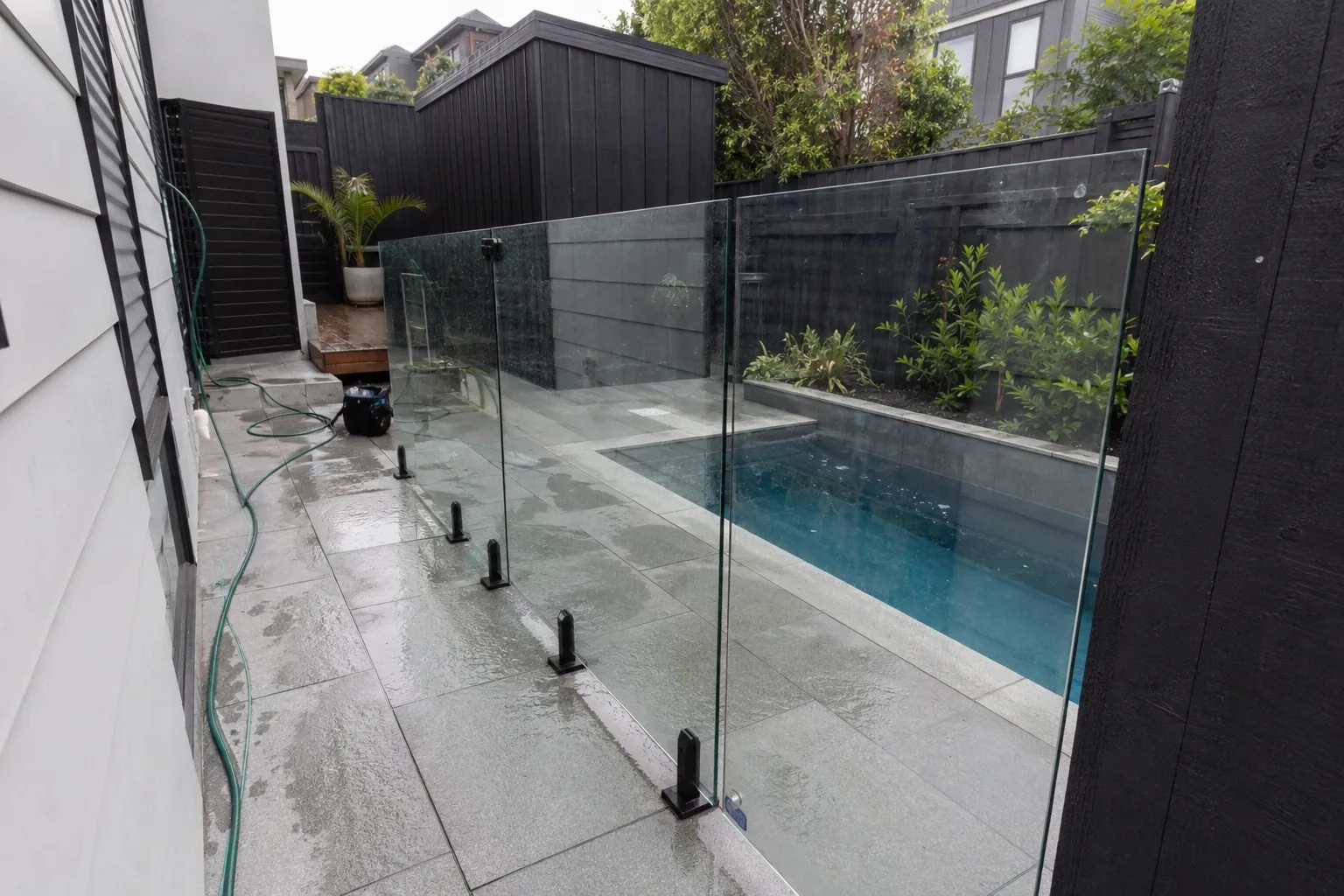
| Pool barrier is required | Section 9A and Building Act/F9 issues require separate attention |
Ownership changes, tenants and landlords
The Act uses “occupier” in a defined way, and notices can be affected by a change of occupier. Tenants should not assume they can commit a landlord to boundary capital work. Identify the registered owners/occupiers and obtain property-management or legal advice where responsibility is unclear.
When agreement breaks down
Keep the proposed scope, quotes, photographs, survey evidence and all notices/cross-notices. Separate disputes about boundary location from disputes about fence adequacy or price. The Disputes Tribunal or District Court may have jurisdiction depending on the issue and amount; check the current legislation and seek legal advice rather than relying on a contractor to resolve ownership law.
Use How to Measure a Fence Boundary for the evidence distinction, then read the Fencing Act guide and neighbour boundary process. Once location and agreement are stable, calculate the physical run with the length calculator.
Primary authority: Fencing Act 1978, latest version. Boundary context: LINZ cadastral survey guidance. General information, not legal advice.