Reviewed: 12 August 2026. Fence removal in Auckland is best quoted as a demolition and waste scope, not as a new-fence metre rate. The site price depends on what is above ground, what is buried, how material leaves the property and what condition the boundary must be left in.
A short timber fence with posts cut at ground level is a different job from a long steel or masonry boundary where concrete footings must be extracted. A useful quote counts posts and gates, identifies fence materials, describes access and states whether the contractor removes footings completely or only the visible fence.
Break the old fence into removal tasks
| Task | Measure | Common complication |
|---|---|---|
| Infill dismantling | Metres by timber, panel, mesh or masonry type | Multiple layers, vines, tensioned wire or brittle sheets |
| Post removal | Post count and section | Unknown depth, rot at ground line or access for extraction equipment |
| Concrete footings | Count or estimated hardfill volume | Oversized pads, rock, paving and adjacent services |
| Gates/equipment | Each opening | Heavy frames, automation, power isolation and access control |
| Vegetation | Defined plants or length | Established roots, protected trees and neighbour ownership |
| Loading/disposal | Bin, weight, truck load or fixed included scope | Mixed waste, treated timber, concrete and long carry distances |
Post extraction often decides the price
Removing boards is usually visible and predictable. Footings are not. Old posts may be set in small collars, deep concrete masses, rock or a continuous mow strip. A rotten timber post can break at ground level while leaving the footing intact. Steel posts may be embedded or fixed to plates. Ask how hidden concrete is allowed for and what evidence triggers a variation.
The replacement set-out matters too. New posts do not always belong in the old holes. Extracting every footing may be necessary where it conflicts with the new design; in another area, breaking a footing below grade and moving the new post may be acceptable. That decision belongs in the replacement specification, not with the demolition crew on the day.
Access changes labour and disposal economics
A truck or skip beside the fence enables direct loading. A rear boundary reached through a narrow house-side path can require boards to be shortened, concrete to be broken into carryable pieces and spoil to be moved repeatedly. Stairs, steep sections, soft lawns and occupied homes add handling and protection work. Photograph the entire removal route, not just the fence.
Minimum-job economics also matter. Travel, tools, loading and disposal fees occur even when only two failed bays are removed. For a small repair, compare targeted removal with leaving sound sections in place. For a full replacement, one combined contractor may coordinate demolition and new set-out more efficiently, but the old-fence scope should still appear as a separate line.
Waste streams should be described honestly
Timber, metal and clean concrete may follow different disposal or recovery paths. Whether anything can be reused depends on condition, treatment, contamination, nail removal, transport and the receiving facility. Do not assume that describing old boards as “salvage” eliminates labour or disposal. State who owns reusable material and who carries the remainder away.
If the fence contains an unidentified sheet, coating or other material of concern, stop and identify it before demolition. The quote should not make an unsupported statement about hazardous material. Likewise, do not allow debris to be buried along the fence line or left on neighbouring land unless that is a lawful, explicit agreement.
Retaining walls, planting and boundaries
A fence can be fixed to a retaining structure or conceal a change of level. Removing it may expose an edge, loose soil or a safety issue that needs temporary protection. The demolition scope should distinguish fence work from retaining work and identify who provides temporary barriers.
Vines and hedges may belong to either neighbour or straddle the line. Confirm what may be cut and how the property is secured during the gap between removal and replacement. If the legal boundary is uncertain, resolve that before treating the existing fence as the set-out reference. The boundary measurement guide explains why a tape measure cannot establish title.
Illustrative 32 metre replacement removal
Illustrative planning example: an ageing 32 m timber paling fence has 14 timber posts, one pedestrian gate, established ivy on 9 m and no vehicle access to the rear boundary. A quote should record 32 m of timber infill, 14 post/footing decisions, one gate, the vegetation extent, the carry route, anticipated concrete handling and the required finish to the cleared line. Multiplying 32 m by a generic removal rate would hide the two largest variables: concrete and access.
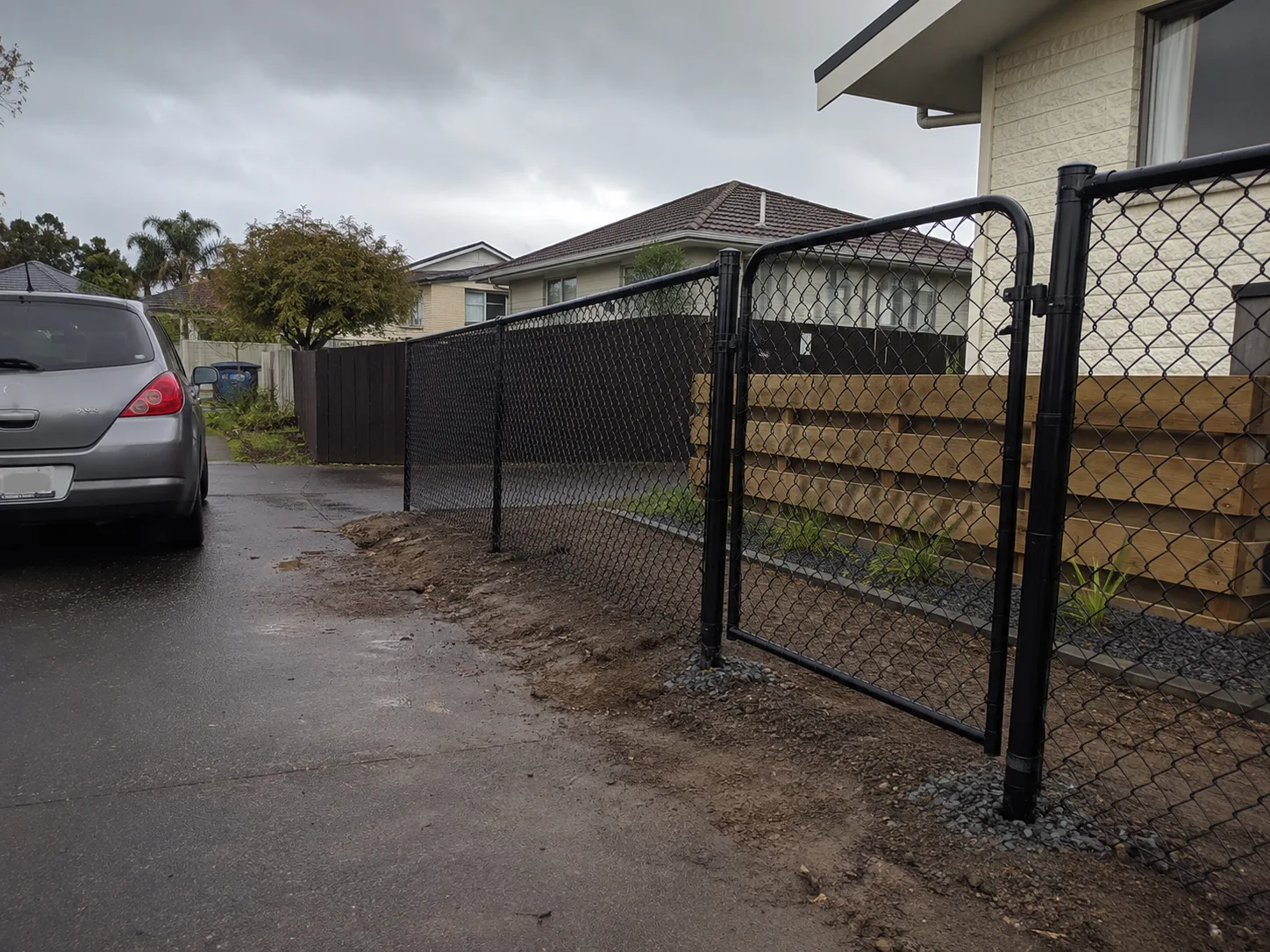
A second scenario—32 m of chain-link with driven posts beside a loading area—could be faster above ground but require safe handling of tensioned wire. The same length does not make the jobs comparable.
Questions that belong in the demolition contract
- Is the price fixed for visible work, and which hidden conditions are provisional?
- Are all posts and footings extracted, cut below grade or assessed individually?
- Who disconnects automation or electrical equipment?
- Are bins, loading, transport, disposal fees and GST included?
- What happens to reusable gates, metal or timber?
- How are holes filled and lawns, paving, retaining or neighbouring surfaces reinstated?
- How is the property secured between removal and new construction?
Measure the runs and openings with the fence length calculator, then attach access, footing and vegetation photographs to the quote request. If replacement is not yet certain, use the repair-versus-replacement guide before authorising wholesale demolition.
Pricing limitation
The structured site record for repairs is $110–$560 per repair visit/item, checked 2026-08-12, but it is not a fence-removal metre rate and is not used as one here. Auckland removal should be priced from a measured demolition schedule and current disposal requirements.